

To the untrailed eye, a rock on the side of the road is just that: a lowly rock. To geologists, they are time capsules chock full of data from some of our planet’s most turbulent days. Now, scientists are unraveling a dramatic story secreted away in rare, roughly 800 million-year-old volcanic rocks called carbonatites. Uncovered deep within central Australia, these seemingly unremarkable rocks are telling geologists about a time when continents ripped violently apart.
Core samples and isotope-dating of the metal-rich carbonatites recently discovered in Australia’s Northern Territory indicate that the rocks traveled near the Earth’s surface between 830 and 820 million years ago. During this time, the ancient supercontinent Rodinia was breaking apart. Rodinia incorporated almost all of Earth’s landmasses for about 450 million years during the Proterozoic Eon (2.5 billion to 541 million years ago), over a billion years before the last supercontinent, Pangaea, formed.
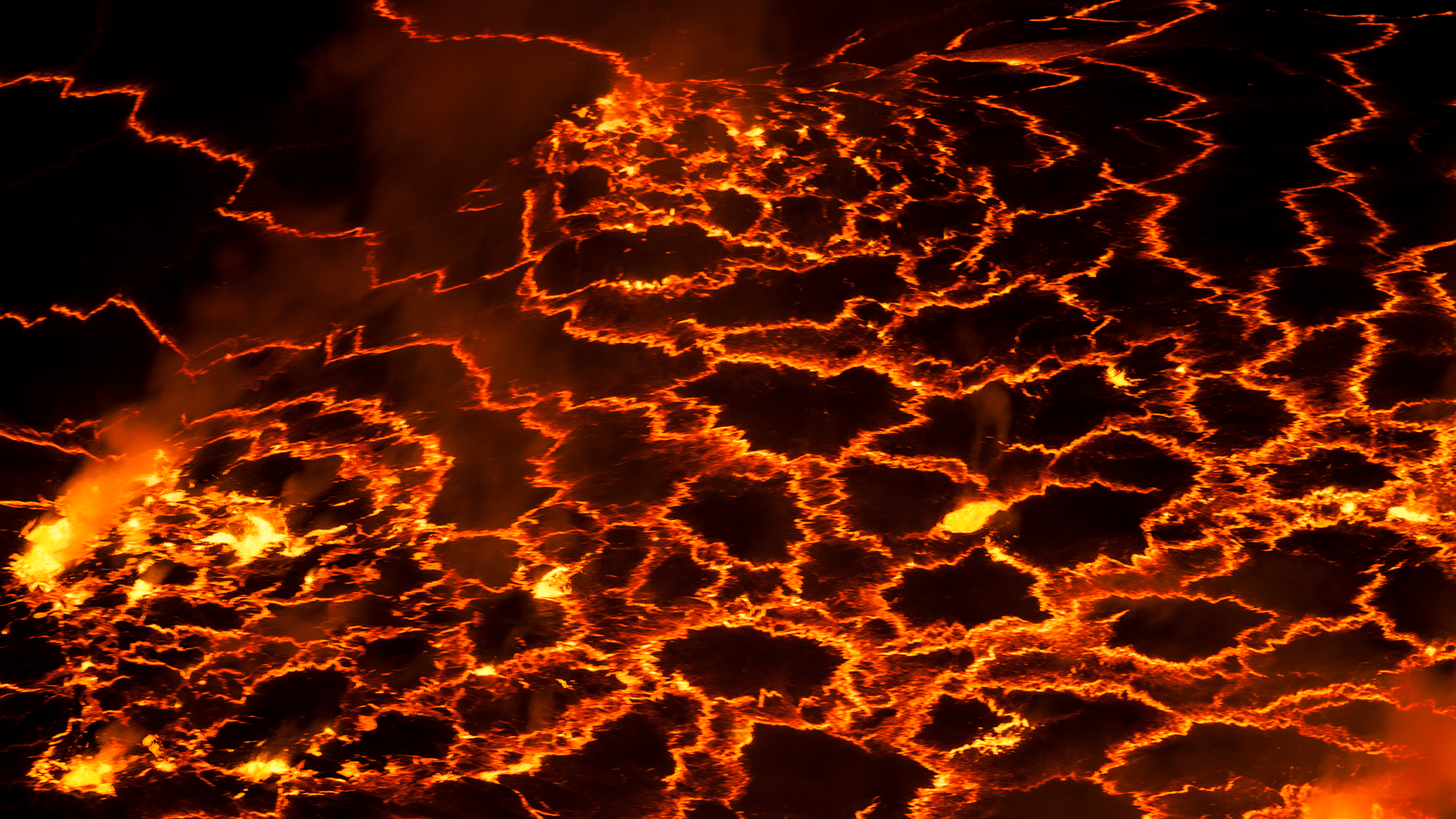
As tectonic plates ripped apart Rodinia about one billion years ago, magma rose up from the Earth’s shifting mantle. Eventually, that magma cooled, crystalized, and solidified creating these rare Australian carbonatites.
“This tectonic setting allowed carbonatite magma to rise through fault zones that had remained open and active for hundreds of millions of years, delivering metal-rich melts from deep in the mantle up into the crust,” study University of Göttingen geochemist Maximilian Dröllner explained in a statement. In other words, these rocks are likely straight from the Earth’s deep middle layer. Dröllner is also the co-author of a recent study published in the journal Geological Magazine that describes the rocks.
Magma or lava-made rocks, known as igneous rocks, are common across the world. But carbonites like these are few and far between.
“Carbonatites are rare igneous rocks known to host major global deposits of critical metals such as niobium and rare earth elements,” added study co-author and geologist Chris Kirkland. “But determining when and how they formed has historically been difficult due to their complex geological histories.”
To unlock their stories, the team used high-resolution imaging to reconstruct over 500 million years of geological events that the rocks experienced. With this approach, the team pinpointed that the carbonatites formed 830 and 820 million years ago. The imaging and isotope analysis also helped the team separate when the rocks went through more subtle changes versus the more dramatic events, such as when Rodina was tearing apart and magma shot up to the Earth’s surface.
These carbonatites also contain one of the world’s oldest deposits of an important metal called niobium. Nobium is a silvery metal that is highly resistant to both heat and corrosion. As such, it is useful for producing high-strength steel and clean energy technologies.
“These carbonatites are unlike anything previously known in the region and contain important concentrations of niobium, a strategic metal used to make lighter, stronger steel for aircraft, pipelines, and EVs, and a key component in some next-generation battery and superconducting technologies,” said Dröllner.
The team’s research sheds new light on how these rare, metal-rich magmas can reach Earth’s surface. Even though this carbonatite deposit is billions of years old, it could still play a role in protecting our planet’s future for hundreds of years to come.

More deals, reviews, and buying guides
