

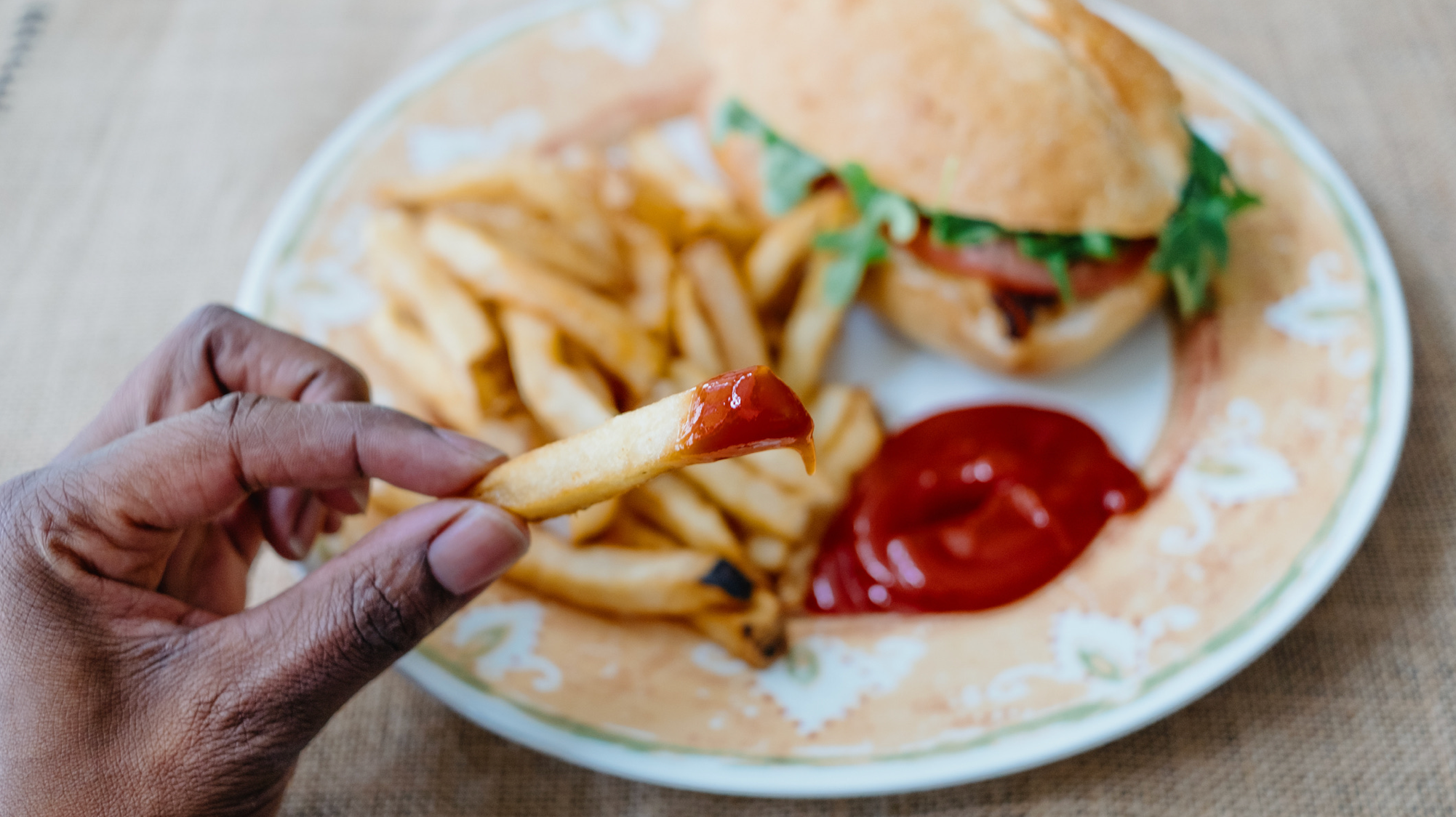
Quick: Picture the contents of a typical U.S. refrigerator. Did you imagine a half-used bottle of ketchup sitting on a shelf? If you did, well done. Since at least the 1920s, ketchup has been the condiment of choice for millions of Americans. It is estimated that 97% of U.S. households consume ketchup with the average American ingesting roughly three bottles of the sauce each year. A pillar of fast food culture, ketchup is affordable, versatile, and a kids-favorite.
Yet, this ubiquitous kitchen staple has a surprising and weird history. From ketchup’s origins in ancient China to its reinvention as a medicinal cure-all, it has taken a millennia for the condiment king to land in your humble refrigerator. Along the way, it’s passed through the hands of eccentric doctors, quixotic salesmen, and savvy food moguls who transformed the sauce from controversial medical remedy to a condiment of choice.
China: the birthplace of ketchup
Ketchup’s unlikely origin begins in 300 BCE China, where Chinese seamen made a fermented fish sauce called “ke-tchup.” In the 17th century, Chinese traders sold this ancient, tomato-less condiment to European traders. That’s when the first records of “ke-tchup,” “ge-tchup,” or “kue-chiap” sauce are found in trading documents and recipes. One of the earliest records of ketchup is a 1732 English recipe entitled “Ketchup in Paste, From Bencoulin in the East Indies” (modern day Indonesia).
By the 18th century, imported ke-tchup made its way onto European tables where it got mixed with local ingredients like mushrooms, walnuts, and elderflower. A 1787 English recipe for ketchup included anchovies, shallots, horse-radish, mace, and nutmeg. None of these early recipes contained what we now consider ketchup’s main ingredient, tomatoes. Indeed, tomatoes did not make their way into ketchup until at least the 18th century.
[ Related: The evolution of sunglasses from science to style (and back again) ]
In the 16th century, when tomatoes were first introduced to Europe and North America from South America, they were considered poisonous—partly because the plant’s leaves contain toxic compounds. So, how did a “poisonous crop” become the central ingredient of America’s beloved condiment? According to food historian Andrew F. Smith, tomatoes benefited from a sort of “rebranding” in the mid 1700s. English and American doctors led this unlikely 18th century PR campaign, as Smith wrote in a journal article entitled “Tomato Pills Will Cure All Your Ills.”
Tomatoes gets medicinal
The first doctor to shift people’s perception of tomatoes was English physician, John Gerard, who in the late 16th century posited that cooked tomatoes, rather than raw ones, could be edible. By the mid 1700s, English doctors were not only embracing “love apples,” as tomatoes were called due to their reputedly aphrodisiac properties, but prescribing them as medicine, mostly to treat digestive and liver-related conditions.
British physicians travelling to America took the tomato-as-medicine concept to the other side of the Atlantic. As Smith wrote, Thomas Jefferson credited British doctor John de Sequeyra for introducing tomatoes to Virginia. According to Jefferson, de Sequeyra would claim that “a person who should eat a sufficient abundance of these apples would never die.”
Soon, the buzz about “medicinal love apples” started to pick up. Doctors in other parts of the U.S. started to prescribe tomatoes to cure indigestion and diarrhea. Indeed, as Smith wrote, it was doctors and physicians, rather than chefs or cooks, that authored the first tomato-based recipes in U.S. cookbooks. James Mease, a scientist and horticulturist from Philadelphia, was one of the first cookbook authors to include tomatoes in a ketchup recipe. His 1812 recipe included thinly cut tomatoes, brandy, mase, allspice, and salt.

The Mormon doctor who prescribed ketchup for diarrhea
Of the many doctors that rebranded tomatoes, no one played a bigger role than John Cook Bennett. Bennett was a “quixotic figure,” wrote Smith, and spent decades of his life promoting the supposed cure-all properties of tomatoes.
During an inaugural lecture at Willoughby University in Ohio, Bennett declared that tomatoes could treat diarrhea, bilious attacks, and indigestion. He urged people to eat tomatoes raw, cooked, or “in catsup.”
In 1840, Bennett moved to Illinois, helped establish the state’s Medical Society, and became a Mormon. During his time in the Church of Jesus Christ of Latter-day Saints, he continued to promote tomatoes, authoring an article on the benefits of the fruit for the Mormon newspaper Time and Seasons published in Nauvoo, Illinois. By the time Joseph Smith, the founder of Mormonism, excommunicated Cook in 1842 for adultery, the Mormon community had already embraced tomatoes as a stomach ache remedy.
[ Related: Lip balm’s surprising history from earwax to Lip Smackers ]
After his excommunication, Bennett kept defending tomatoes, writing about their medicinal qualities in American, English, and Australian publications. But, according to Smith (the historian, not the Mormon), it was in the U.S. where the “tomato craze” really took off. In 1835, doctor A.J. Holcombe introduced the first “tomato pills” in Glassboro, Alabama. Other tomato pills salesmen soon followed, including Cleveland-based Archibald Miles and Yale-educated doctor Guy R. Phelps. Advertised as a pure extract of tomato fruit, these capsules were sold in pharmacies and grocery stores and promoted with the jingle “tomato pills will cure all your ills.”
But not all doctors endorsed the tomato pills craze, wrote Smith. During an 1869 debate hosted by the American Medical Association, some physicians disputed tomatoes’ medical properties and criticized tomato pills—which later investigations found contained no tomato at all. By 1865, medical myths about tomatoes started to fade, but tomatoes had already become a favorite American vegetable. Their popularity coincided with innovations in commercial bottling that helped pave the way for ketchup’s future ascent.
Enter H.J. Heinz
In the late 19th century, glass-makers introduced inexpensive, mold-formed flasks. These made it much easier to transport and store sauces, allowing food companies to bring their products to market more easily. And that’s when the ketchup titan, Henry John Heinz, got involved.

Heinz founded the H.J. Heinz Company in 1869, initially selling horseradish, sauerkraut, vinegar, and pickles. In 1876, Heinz added “catsup” to its list of products. While not framing catsup as medical, Heinz cleverly marketed the sauce as a wholesome, reliable product. Initially sold in clear-glass bottles, Heinz wanted to showcase the high quality ingredients used in the company’s catsup. The word “tomato” was later added, highlighting catsup’s plant-based ingredients. Then, in 1890, Heinz patented an octagonal-shaped bottle for their sauce and changed the spelling to ketchup. Tomato ketchup had finally been born.
Ketchup’s final leap into American food culture wasn’t driven by taste, but by law. The 1906 Pure Food and Drug Act, introduced the idea that industrial food had higher standards of hygiene, safety, and consistency compared to homemade products, Maryann Tebben, author of Sauces: A Global History, tells Popular Science. Food companies doubled down on this idea with ads framing their products as safe and reliable. Soon enough, consumers started to prefer commercially bottled sauces to homemade ones. Ketchup’s consumption took off in the 20th century with the explosion of fast food restaurants, when it found its perfect pairing with french fries and burgers. The introduction of easy-to-squeeze plastic bottles further cemented its place as a household staple in the 1980s.
Today, ketchup has lost some ground to newcomers, such as salsa. Salsa now outsells ketchup by dollar amount, says Tebben, yet American households still purchase more tomato ketchup by volume. Two centuries after its medical rebranding, ketchup has yet to be dethroned as king of American condiments.

More deals, reviews, and buying guides
