

| October 6 | Full Harvest Supermoon |
| October 8 | Draconid Meteor Shower Predicted Peak |
| October 14 | Jupiter Visible Near Crescent Moon |
| October 21 | Orionid Meteor Shower Predicted Peak |
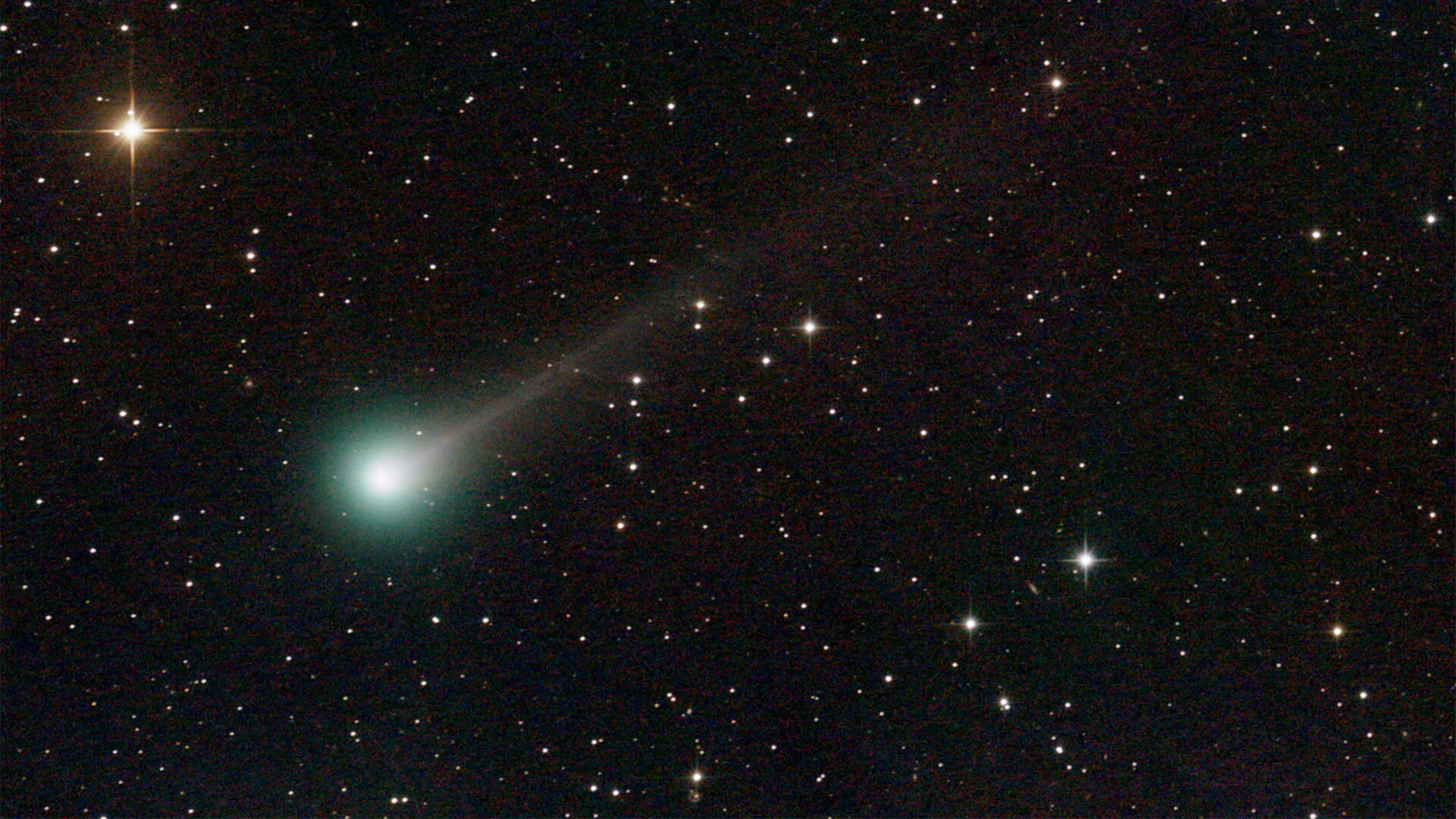
| October 21 | Comet C/2025 A6 Makes Closest Earth Approach |
Stargazers will be happy to know that October will see the cosmos compensating for a couple of relatively lean months.There will be a whole bunch of celestial bodies to see over the next month, including the year’s largest and brightest full moon, the arrival of a brand new comet, two meteor showers and a good chance to see our solar system’s favorite big fella in all his glory.
October 6: Behold the Harvest Supermoon!
October’s full moon finds our closest celestial companion at its perigee, i.e. the point at which it’s closest to the Earth. This means that this month’s full moon will be [drum roll] a supermoon! It’ll be larger, brighter and generally more imposing than usual, and as per the Farmer’s Almanac, it’ll reveal its full glory at 11:47 p.m. EDT on October 6.
October 8: Draconid Meteor Shower Predicted Peak
Fall is meteor season, and early October will bring the first of the month’s two celestial spectaculars: the Draconid shower, sometimes called the Giacobinids. The shower is predicted to begin on October 6, peak on October 8, and come to an end around October 10. The Draconids are unusual in that their intensity can vary significantly from year to year. Most years only a few meteors are visible, but occasionally that number increases significantly. The last really spectacular Draconid eruption was in 1946, when several thousand meteors per hour lit up the sky.
It’s never entirely clear when the next big Draconid storm will take place, which means that this particular meteor shower always makes for potentially exciting viewing. As per Earthsky.org, the radiant point—the point from which the shower originates—will be highest in the sky just after dark on October 8. Look toward the constellation Draco, which is directly above the Big Dipper in the northern sky.
October 14: Jupiter Visible Near the Moon
He’s a big lad! An absolute unit! But even so, Jupiter isn’t always the easiest planet to observe. This month, though, our boy isn’t feeling shy.Jupiter will be visible all month, and will only get progressively brighter throughout October. As per the Adler Planetarium, perhaps the best night to see the solar system’s biggest planet will be October 14, when Jupiter will be visible to the right of the crescent moon from just before midnight.
October 21: Comet C/2025 A6 (Lemmon) Passes Close to the Earth
It’s been a while since we’ve had a decent comet sighting, but this month brings the arrival of Comet C/2025 A6, otherwise known as Comet Lemmon. Lemmon is a very new discover.It was first observed in January this year, and its relative novelty means there’s still a lot we don’t know about it—including exactly how bright it will be when it makes its closest approach to the Earth on October 21. As Earthsky.org explains, the comet has been becoming steadily brighter over the last month or so, but it’s unclear whether this trend will continue, or if it’s just some sort of temporary period of increased activity.
If Lemmon does continue to increase in brightness, it may well be visible to the naked eye on the night of October 21, but if not, a small telescope should let you see it easily enough. Either way, it will appear low in the northwestern sky, close to the star Arcturus. And be warned, this will be your one and only chance to take a look. Once it slingshots around the Earth and careers off toward the outer solar system, Lemmon won’t return for 1,396 years.
October 21: Orionid Meteor Shower Predicted Peak
October 21 is shaping up as a particularly good night to spend in the company of a telescope, because it’s also the predicted peak of the Orionids. While the Draconids are over in a matter of days, the Orionids will be visible for quite some time. The shower began in late September and will last until late November. Their peak is predicted for the early hours of October 21, just after midnight. The radiant point will be highest in the sky at about 2 a.m. EST, just to the left of the constellation Orion in the southwestern sky.
Also, fun fact about the Orionids: they originate from Halley’s Comet. The most famous comet of them all is currently way out towards its aphelion (the point at which it’s furthest from the sun), and won’t return to the inner solar system until 2061.
