

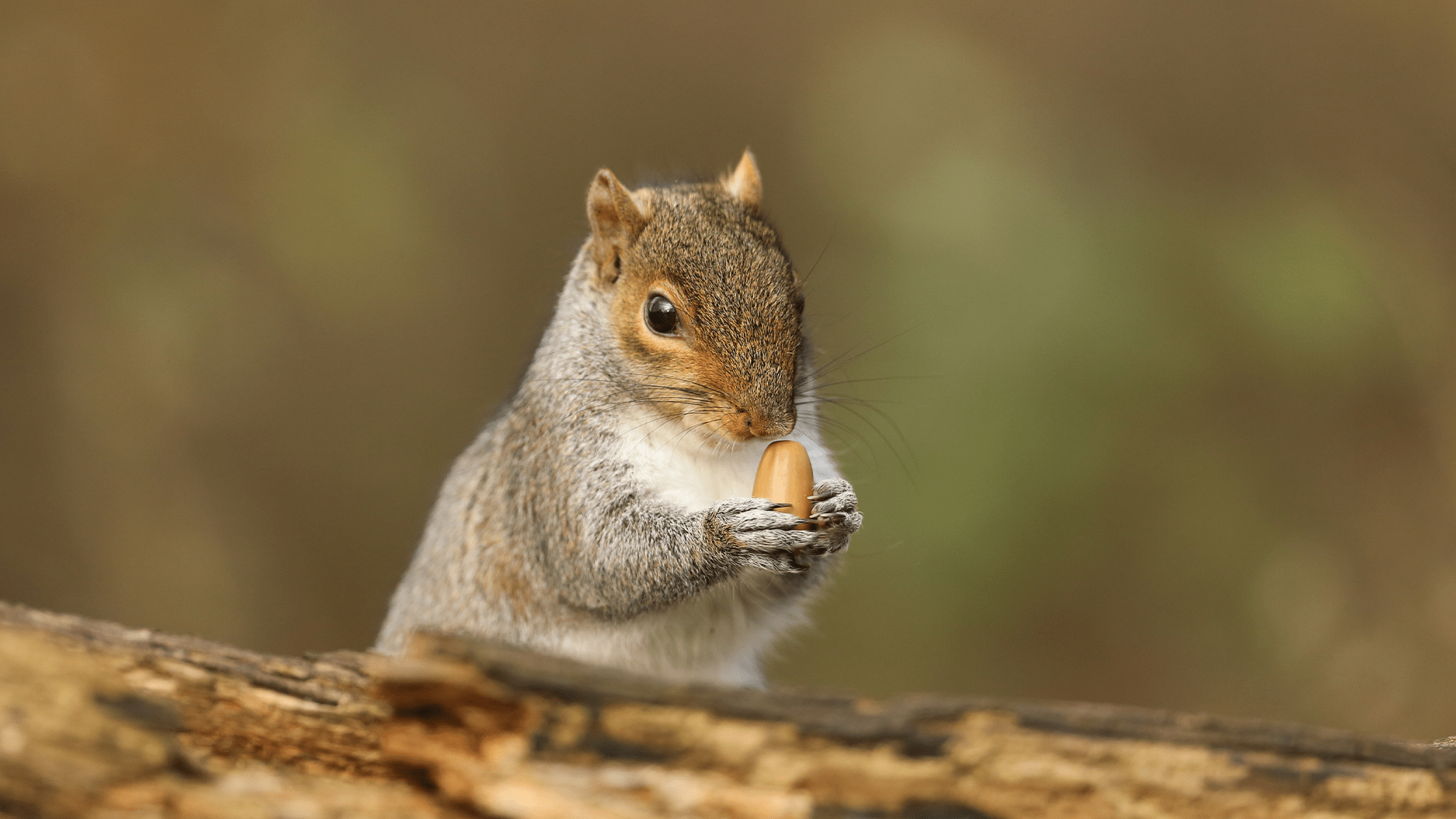
While humans are Earth’s most dominant animal species, it’s really a rodent’s world and we are just living in it. Roughly half of all the mammal species on the planet are rodents such as rats, mice, squirrels, and hamsters and they are found on every single continent except for Antarctica. Their rapid reproductive rates, flexible bodies, diverse diets, and more have made them the ultimate survivors. Some of their success may also be due to a fairly innocuous body part—thumbnails.
Instead of sharp, pointy claws, several rodent species including squirrels actually have smooth, flat nails on their thumbs. The nails compliment the curved claws on their other fingers, and help squirrels handle food with their front paws. A peek back into the rodent family tree indicates that these thumbnails may contribute to rodents’ evolutionary success, since they make it easier to eat. These findings are detailed in a study published September 4 in the journal Science.
‘Did you know rodents have thumbnails?’
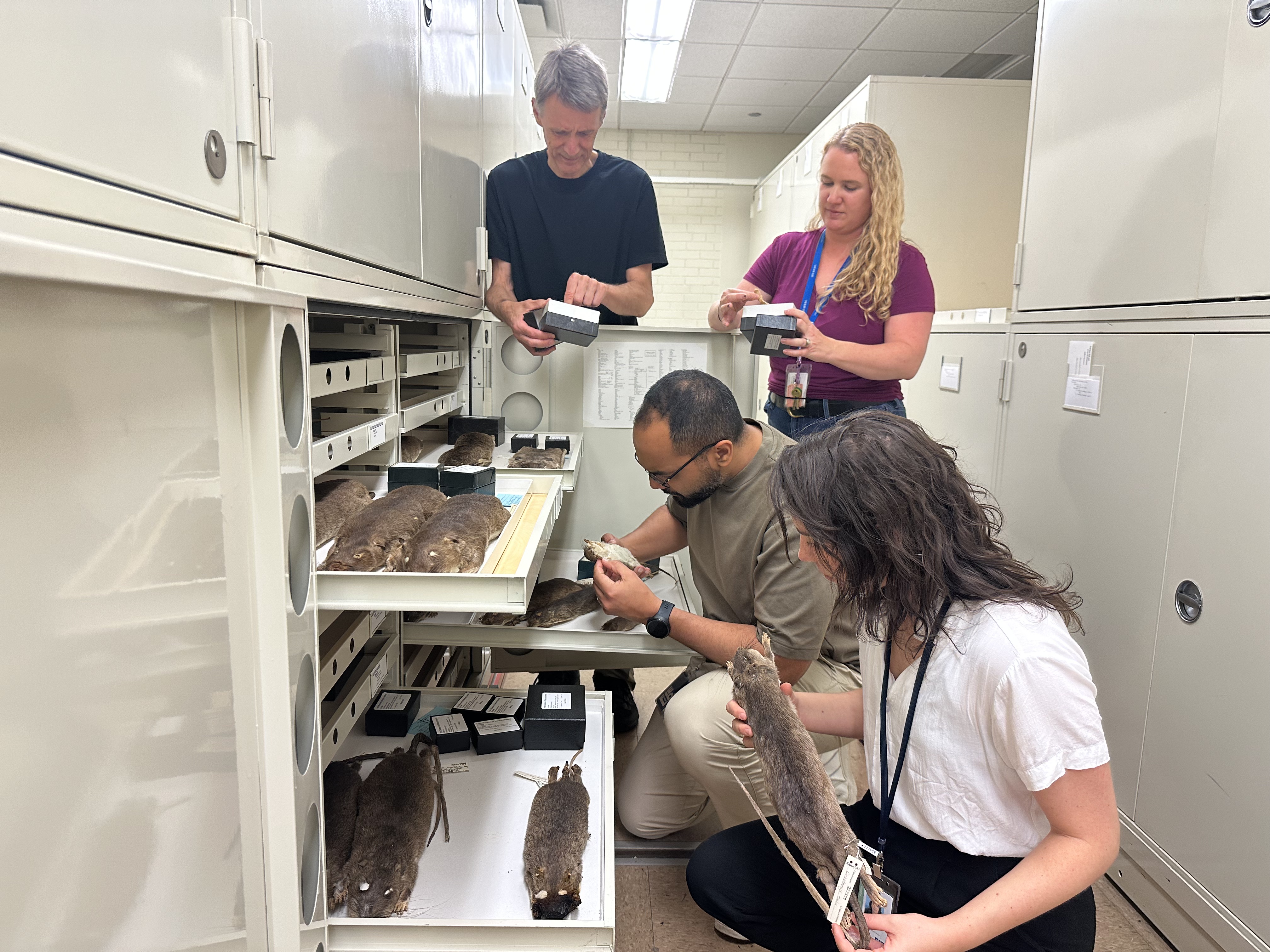
To travel back in time, a team of scientists dug through the mammal collections at The Field Museum in Chicago. Rodents make up roughly 40 percent of all known mammal species, so they had quite a bit to go through to solve their thumbnail mystery.
“When I talk with people about this research, I always start by asking, ‘Did you know rodents have thumbnails?’ Most people don’t. I didn’t,” study co-author and evolutionary biologist Rafaela Missagia said in a statement. “I had studied rodents for years, and I didn’t know anything about their nails until I started working on this project at the Field Museum.”
When Northwestern University neuroscientist Gordon Shepherd learned that some rodents have thumbnails and some have claws, he reached out to the Field to search for bigger patterns in their vast mammal collections.
“Before we did the research, we knew that some had nails, some had claws, and some had no thumbs at all,” said Shepherd, also an author of the new study. “There were hints that the rodents that have thumbnails also use their thumbs to hold their food.”
That’s a lot of rodents
For the study, the team took on the arduous process of examining the preserved skins of rodents.
“There are more than 530 different genera of rodents, containing over 2,500 species. We looked at 433 of those genus groups from all across the rodent family tree,” added Anderson Feijó, the Field Museum’s curator of mammals and a study co-author.
Of the hundreds of animals surveyed, 86 percent included species that have thumbnails. Then, they cross referenced this finding with photos, journal articles, and other data on rodent feeding habits across species.
“Using that information, we reconstructed the rodent family tree in terms of rodents that handle food with their hands versus ones that only use their mouths,” said Shepherd.
Nuts for nuts
They found that rodents like guinea pigs that don’t have thumbs (and thus no thumbnails) generally don’t handle food with their hands.
The analyses also found that modern rodents descend from a common ancestor thousands of years ago that had thumbnails. This trait likely evolved about 60 million years ago, making it quite far back in the rodent family tree. This early ancestor and its thumbnails may be key to explaining how rodents eventually took over the world.
“We also found supporting evidence in the fossil record,” Missagia tells Popular Science. “Some of the earliest known rodents, dating to about 50 million years ago, have thumb bones that are short and wide—a shape more consistent with bearing nails rather than claws, since nails tend to be broader while claws are typically narrow and curved,”
The team hypothesizes that rodents’ eventual slim, flat thumbnails allow for more manual dexterity than long, sharp claws. Essentially, thumbnails make it easier for rodents to handle and eat a nut.
“Nuts are a very high-energy resource, but opening and eating them requires good manual dexterity that a lot of other animals don’t have—maybe rodents’ thumbnails allowed them to exploit this unique resource and then diversify broadly, because they were not competing with other animals for this food,” said Feijó.
Aside from rodents, primates are the only animals that have evolved nails on their thumbs instead of claws. The rodents with nails were also more likely to live in trees like many non-human primates. However, some of Earth’s earliest rodents that went extinct thousands of years ago, were more likely to have claws and not thumbs, according to Missagia.
This study helps explain how rodents evolved into the thousands of species we see today. It also highlights the importance of preserving museum collections, as untold ecological treasures are often lurking inside those old cabinets.
“Museum collections are an endless source of discoveries,” concluded Feijó. “For all of the rodents that were used in this study, I bet none of the collectors would have imagined that someone someday would be studying those rodents’ thumbnails.”

More deals, reviews, and buying guides
