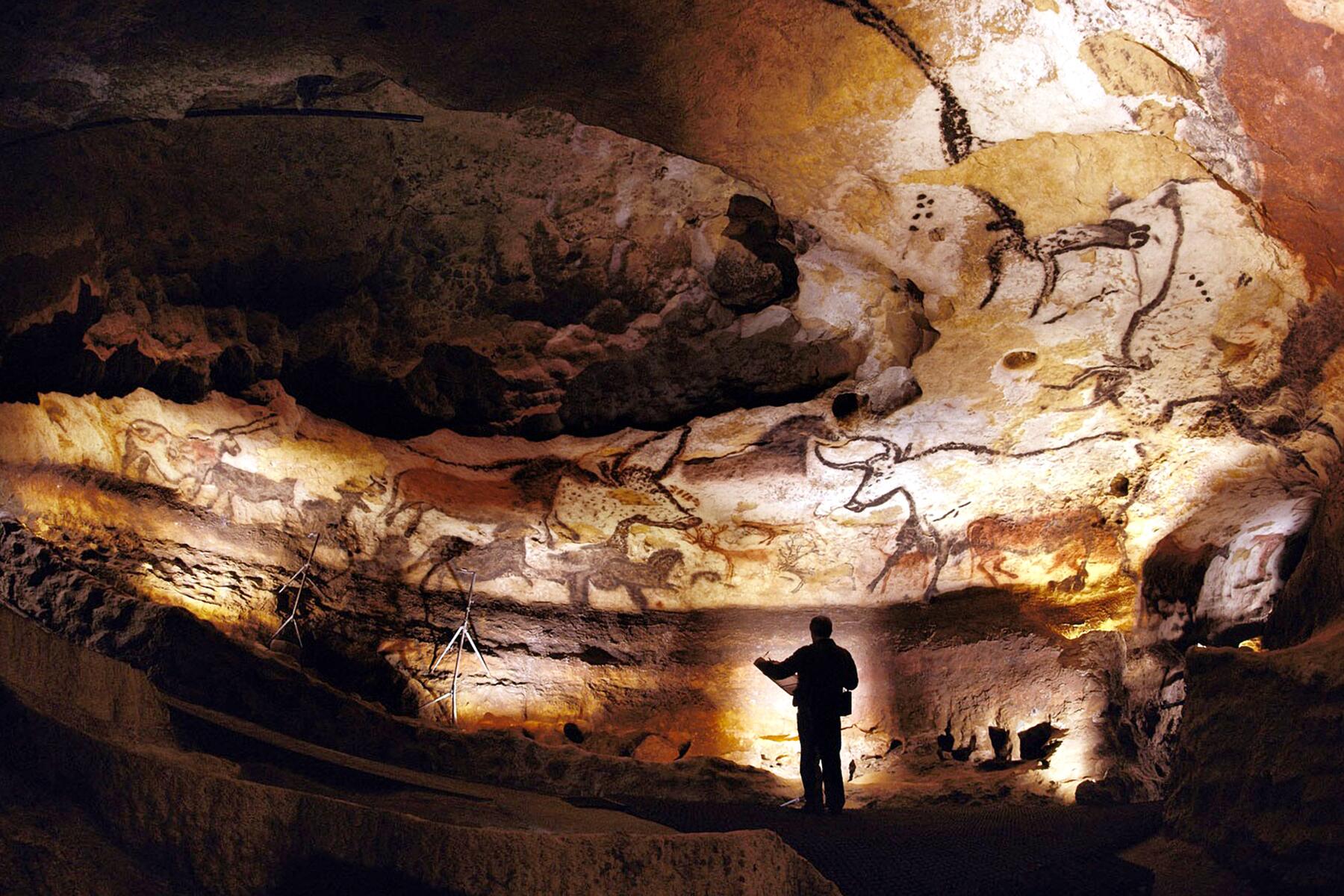
It was Robot the Dog, who first discovered Lascaux in 1940—or so the legend goes—disappearing down a hole after a rabbit, four French teenagers trailing behind him. But at the bottom of the shaft, 50 feet below ground at the edge of the forest outside the southwestern village of Montignac, France, the kids found more than just their pet: More than 6,000 paintings of animals, human figures and abstract symbols decorated the cave walls, a spectacular stone canvas in shades of red, yellow and black. Included among the images, which are estimated to be around 17,000 years old, are the paintings of 364 horses, 90 stags, seven felines, a bear and a rhinoceros. Opened to the public in 1948, the combined carbon dioxide, heat, and contaminants produced by 1,200 visitors per day had damaged the paintings so badly that authorities decided to shut down the caves. Lascaux has been sealed to the public since 1963.
Trending
- Who Is Trump’s New Fed Chair Pick?
- X deactivates European Commission’s ad account after the company was fined €120M
- Is it true that… you should take vitamin C when you’ve got a cold? | Alternative medicine
- Elon Musk’s X bans European Commission from making ads after €120m fine
- Cardiff man loses £13K in ‘truly terrible’ car clone fraud
- Historic search for ‘huge missing piece’ of the universe turns up negative — but reveals new secrets of particle physics
- ‘Kids can’t buy them anywhere’: how Pokémon cards became a stock market for millennials | Pokémon
- Mike Johnson strips military IVF coverage from defense bill – report | US military