

Lead is highly regulated today, but that wasn’t always the case for the toxic heavy metal. In fact, the industrial ingredient was at once so pervasive that experts estimate around 90 percent of Americans born between 1951 and 1980 amassed problematically high levels of the element in their bloodstreams during childhood. While lead pollution remains a major public health and environmental hazard across much of the world, at least one species is stunning researchers with its unexpected resilience.
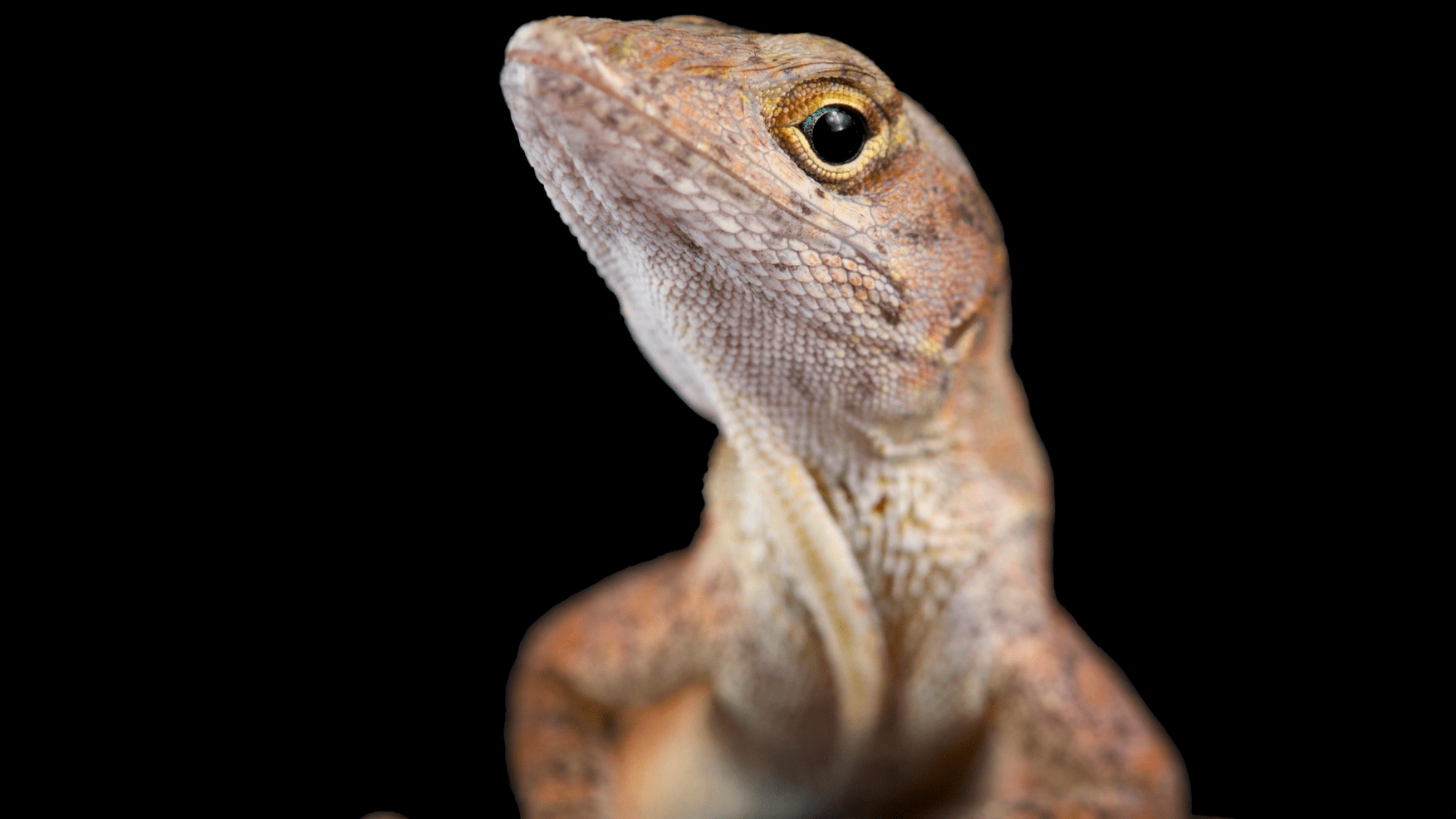
The Cuban brown anole lizards (Anolis sagrei) of New Orleans, Louisiana, contain the highest blood-lead levels ever seen in a vertebrate, according to a study published in the journal Environmental Research, The percentage is so high, that a similar concentration would likely kill most other animals. However, the anoles aren’t only unfazed by it—they’re continuing their invasive spread across the region.
“These lizards aren’t just surviving, they’re thriving with [a] lead burden that would be catastrophic for most other animals,” study co-author and Tulane University evolutionary biologist Alex Gunderson said in a statement.
Unlike the city’s native green anole (Anolis carolinensis), experts believe brown anole arrived by way of the Caribbean as recently as the 1990s. Their numbers have particularly exploded over the past two decades, with a population that now surpasses its indigenous reptile relative. Contrary to these comparatively new arrivals, however, New Orleans was established as a French colonial settlement in 1718. Today’s city and its over three centuries’ worth of civic infrastructure, technological advances, and industrialized living provides an excellent backdrop to study lead’s longterm environmental effects on wildlife
“New Orleans is an old city, which means it has a long history with things like lead paint and leaded gasoline, and lead from those sources made their way into the dirt,” Gunderson tells Popular Science.
He says that studying lead levels requires studying the soil itself, and lizards are a great animal to use as a reference point. “The lizards live close to the ground, so they are breathing in dust with lead in it and eating insects that have lead on and in them,” explains Gunderson.
In their paper, Gunderson and project lead Annelise Blanchette also wrote that brown anoles are particularly useful because they “already serve as a model system in urban, physiological, and evolutionary ecology.”
“My goal was also to understand how living in cities impacts wildlife, and these lizards are well adapted to cities so I was curious if we would see any anthropogenic effects,” Blanchette tells Popular Science. The results of her curiosity soon left her “absolutely shocked.”
After collecting wild brown anoles and analyzing biological samples, Blanchette and colleagues discovered that the lizards displayed the highest mean and individual blood-lead concentrations of any known vertebrate. What’s more, they showed little-to-no impairment to abilities often affected by lead poisoning, such as sprint speed, endurance, and balance. Further experiments showed that the brown anoles required a lead intake around 10 times higher than their already intense levels to result in any noticeable deterioration. Examinations of the anoles’ brain and liver tissues also only revealed “minor effects” from lead exposure.
“I saw that the levels were high but it didn’t really click with me until we had confirmed the first round of data,” Blanchette says. “Once I realized the blood lead levels other free-living wildlife tend to cope with are much lower, I was astounded by the anoles. I knew we had kind of stumbled upon something special.“
It remains unclear exactly how or why the brown anoles of New Orleans treat lead like it’s no big deal, although researchers noted the lizards displayed multiple altered genes tied to metal ion regulation and oxygen transport. That said, the researchers cautioned against thinking that all bioengineering human genetics to tolerate larger amounts of lead is a viable path forward. Instead, they say their discovery underscores the importance of further exploring lead’s wide-ranging ecological effects.
“We need to reevaluate what we know about toxicity thresholds in vertebrates,” Gunderson said. “If we can figure out what’s protecting them, we might uncover strategies that could help mitigate heavy metal poisoning in people and other species.”
